
Architecture Overview
Go Bananas! is built as an edge-deployed, multi-tenant MCP server on Cloudflare's global network.
High-Level Architecture
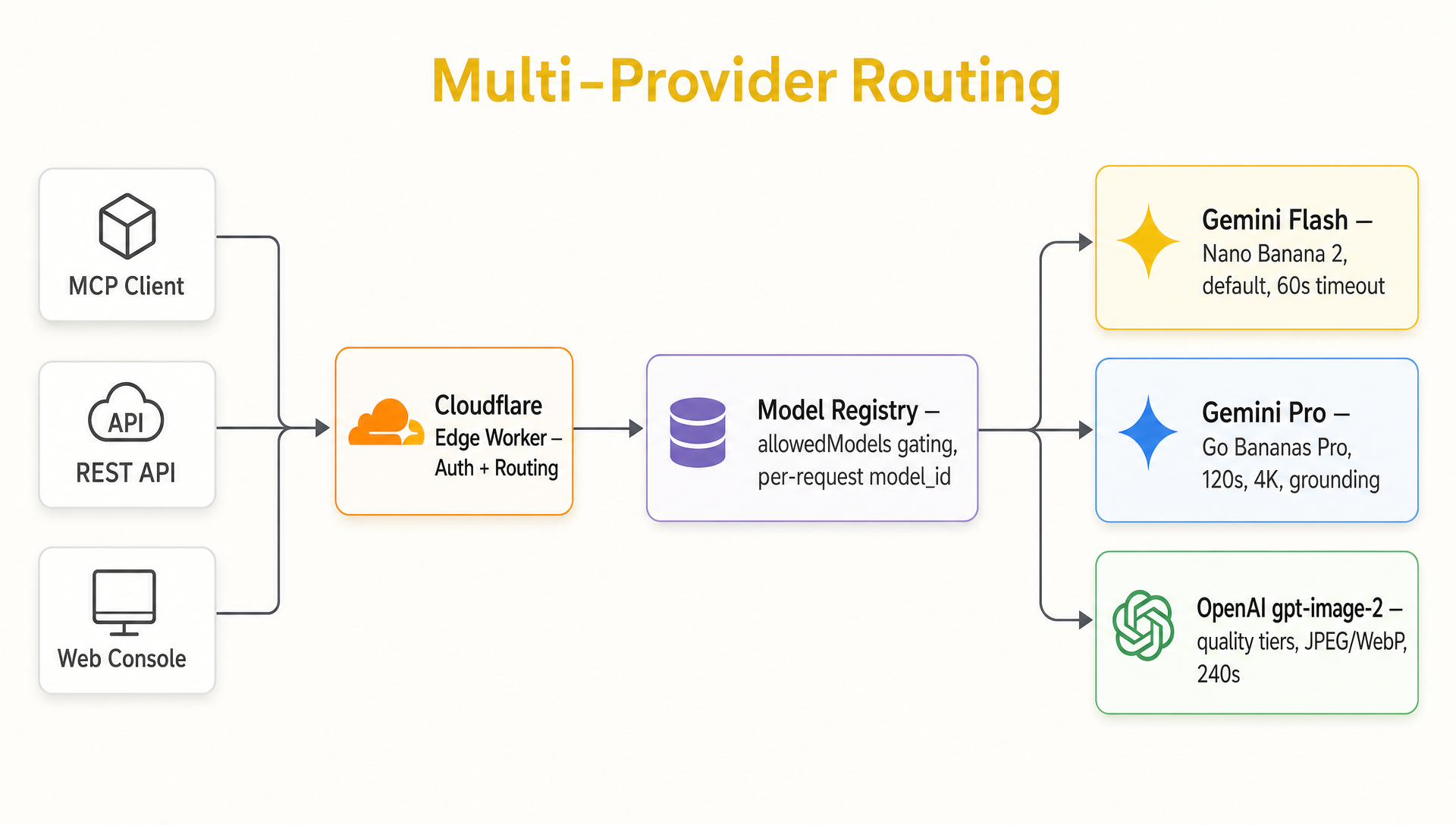
MCP clients, the REST API, and the Web Console all hit the same Cloudflare Edge Worker, which routes through the model registry to whichever provider the tenant chose for that request.
Key Design Principles
1. Edge-First Architecture
Deployed to 300+ Cloudflare data centers worldwide:
- Sub-10ms routing to nearest edge
- Automatic scaling with no cold starts
- Global data via Durable Objects
2. Multi-Tenant Isolation
Complete data separation between tenants:
- Database: All rows filtered by
tenant_id - Storage: R2 keys prefixed with
{tenant_id}/ - API Keys: Multiple keys per tenant
3. Stateful Sessions
Durable Objects maintain conversation context:
- Session tracking:
last_image_idfor conversational editing - Request-scoped: Context lives for request duration
- Persistent state: Session data saved to D1
4. Hybrid Storage
Optimized for different data types:
- R2: Binary image data (cost-effective, CDN-backed)
- D1: Metadata, relationships, search indexes
- KV: Fast lookups for config and keys
Component Overview
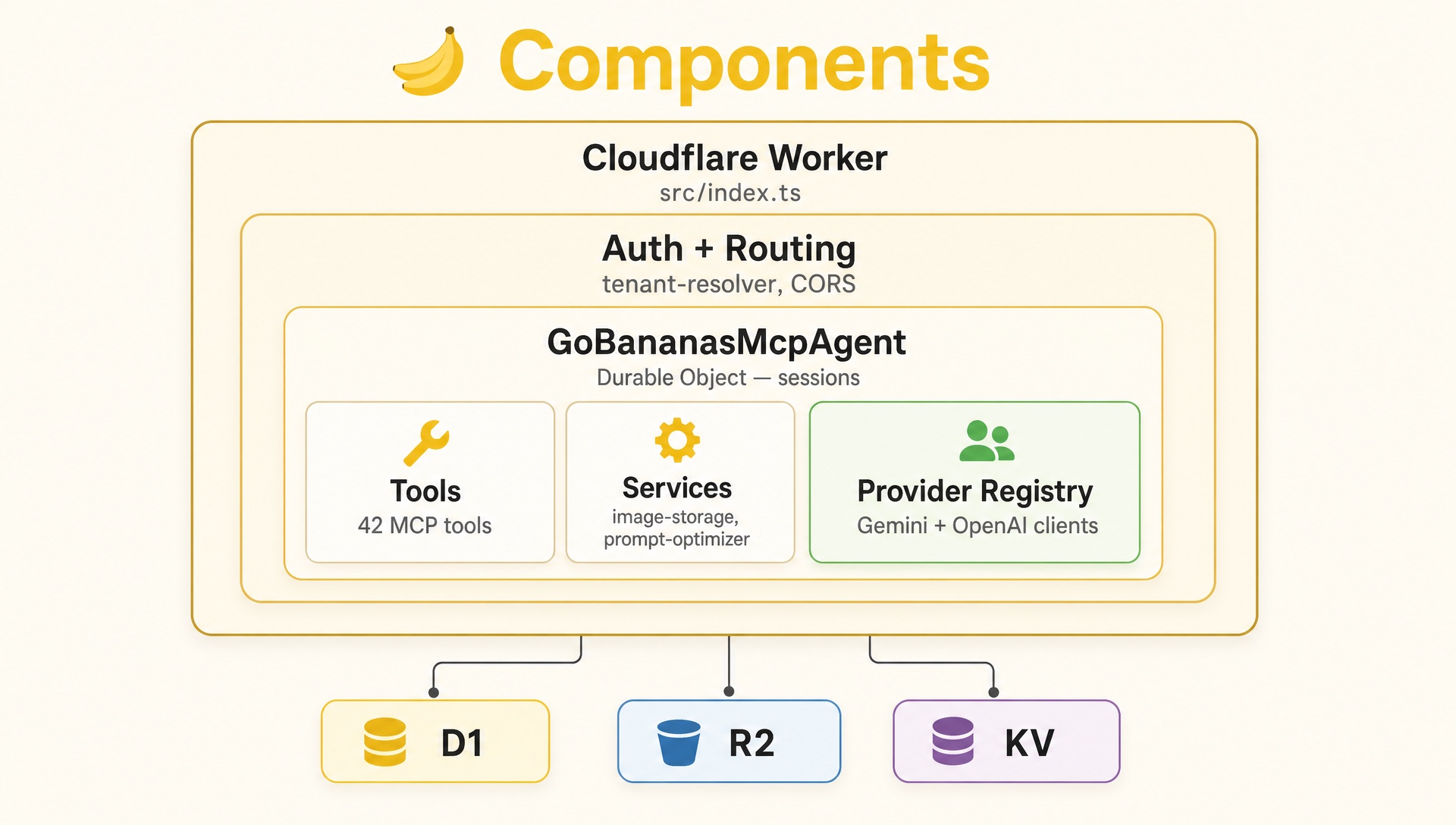
Worker entry point, MCP Agent, services layer, and storage
| Component | Technology | Purpose |
|---|---|---|
| Entry Point | Cloudflare Worker | Request routing, auth |
| MCP Agent | Durable Object | Stateful MCP handling |
| Database | D1 (SQLite) | Metadata, relationships |
| Object Storage | R2 | Image files |
| Cache | KV | API keys, config |
| AI Backend | Gemini API + OpenAI API | Image generation (per-tenant model registry) |
Request Lifecycle
Every request follows this path:
- Ingress → Worker receives HTTP request
- Authentication → OAuth bearer token or API key validated
- Routing → Request forwarded to Durable Object
- Execution → MCP tool processes request
- Storage → Results saved to R2/D1
- Response → Results returned to client
Documentation Structure
Explore each architectural component:
| Section | Coverage |
|---|---|
| System Overview | Complete system diagram |
| Request Flow | Request processing sequence |
| Multi-Tenancy | Tenant isolation patterns |
| Data Flow | How data moves through the system |
| Storage Architecture | R2, D1, and KV patterns |
| Session Management | Stateful conversation handling |
| Character System | Character reference architecture |
| Security | Encryption and access control |
Technology Stack
Runtime
- Cloudflare Workers - V8 isolate runtime
- Durable Objects - Stateful edge compute
- TypeScript - Type-safe development
Storage
- D1 - Serverless SQLite database
- R2 - S3-compatible object storage
- KV - Key-value store
Frontend
- React 18 - UI framework
- Vite - Build tool
- TailwindCSS - Styling
External
- Gemini API (Flash Lite, Flash, Pro) - Image generation
- OpenAI API (GPT Image 2, GPT Image 2.5 Flare and Sunburst) - Alternative image provider, tenant-selectable
- MCP Protocol - AI integration standard
Performance Characteristics
| Metric | Target | Typical |
|---|---|---|
| Auth latency | <5ms | 2-3ms |
| D1 query | <10ms | 3-5ms |
| R2 read | <50ms | 20-30ms |
| Provider call (Flash) | <10s | 3-5s |
| Provider call (Pro / OpenAI) | <30s | 8-25s |
| E2E generation | <15s | 5-8s |
Scaling Model
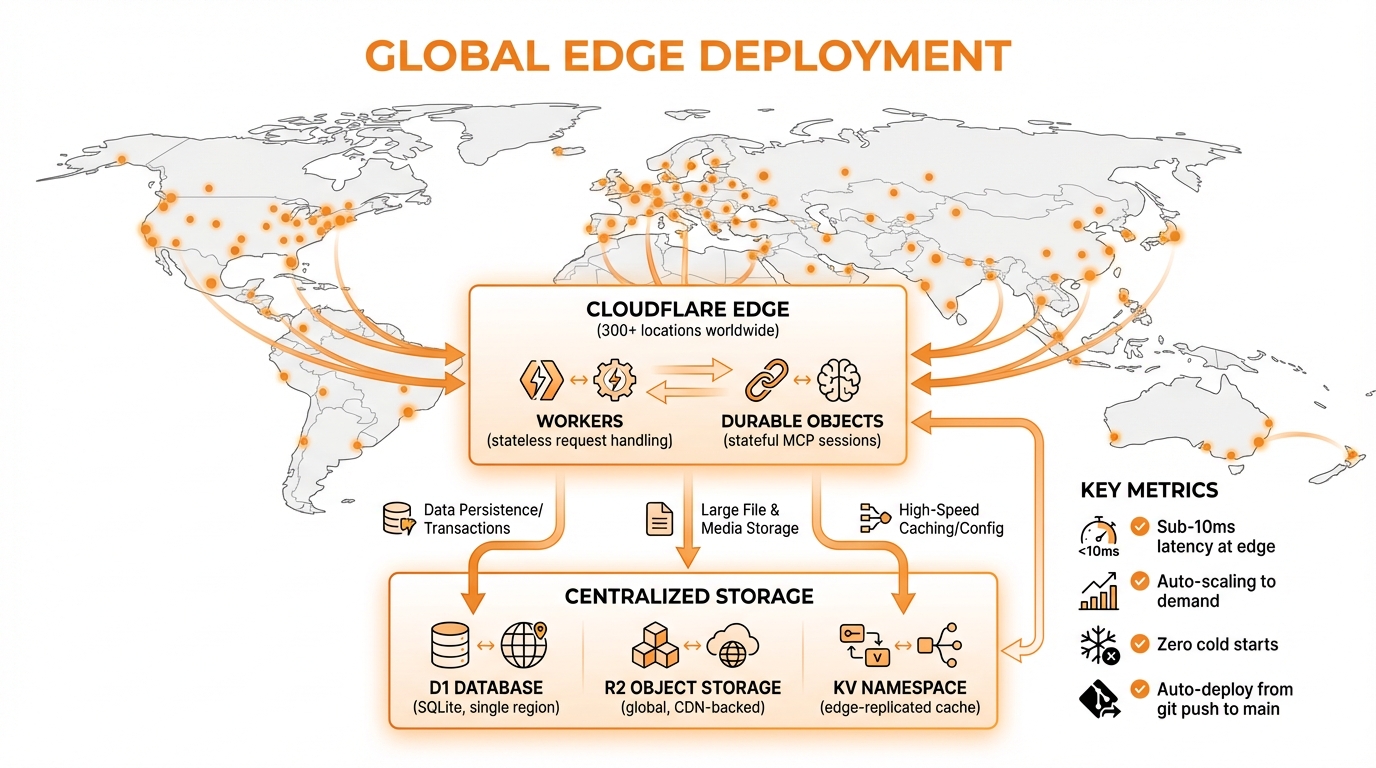
Deployed to 300+ edge locations worldwide
- Workers: Unlimited parallel execution
- Durable Objects: One per session ID
- D1: Shared with concurrent access
- R2: Unlimited parallel reads/writes